This manual provides essential information for 2013 Toyota Highlander owners‚ including operation‚ maintenance‚ and safety features. PDF versions are readily available online.
Overview of the Manual’s Purpose
The 2013 Toyota Highlander Owner’s Manual serves as a comprehensive guide to understanding your vehicle’s features and ensuring safe operation. It details everything from basic controls to complex systems like the available hybrid technology. This manual assists with routine maintenance‚ explains warning lights‚ and provides crucial safety information regarding airbags and child restraints. Accessing the PDF version offers convenient‚ readily available support for all Highlander owners‚ promoting responsible vehicle ownership and maximizing driving enjoyment.
Where to Find the Digital Manual (PDF)
The 2013 Toyota Highlander Owner’s Manual in PDF format is accessible through Toyota’s official website and various online resources. Websites dedicated to vehicle manuals frequently host downloadable copies. A quick online search for “2013 Toyota Highlander Owner’s Manual PDF” will yield numerous results. Owners can conveniently view‚ save‚ and print the manual for easy reference‚ ensuring they always have vital vehicle information at their fingertips.

Vehicle Identification & Key Information
Locate your Highlander’s unique Vehicle Identification Number (VIN) and understand key fob operations for security and vehicle access‚ as detailed within.
Vehicle Identification Number (VIN) Location
The 17-digit VIN is crucial for identifying your specific 2013 Toyota Highlander. It’s located on the driver’s side dashboard‚ visible through the windshield. Additionally‚ you can find it on the vehicle’s registration‚ insurance card‚ and the driver’s side doorjamb. This unique code is essential for warranty claims‚ service records‚ and theft recovery‚ ensuring accurate vehicle tracking and identification throughout its lifespan.
Key System & Key Fob Operation
Your 2013 Highlander utilizes a transponder key system for security. The key fob controls locking‚ unlocking‚ and the panic alarm. Battery replacement is necessary when functions diminish. Ensure proper synchronization after replacement. Refer to the owner’s manual for detailed instructions on pairing and programming additional keys‚ as well as troubleshooting remote operation issues for optimal functionality.

Understanding Your Highlander’s Features
The 2013 Highlander boasts diverse interior and exterior controls. Familiarize yourself with these features for a comfortable and safe driving experience‚ as detailed in the manual.
Interior Features & Controls
The 2013 Highlander’s cabin offers a range of features‚ including the audio and navigation systems‚ climate controls‚ and comfortable seating arrangements. Understanding the placement and operation of these controls – like the HVAC system and audio settings – is crucial. The owner’s manual details each feature‚ ensuring drivers can easily adjust settings for optimal comfort and convenience during every journey. Explore the manual for detailed instructions.
Exterior Features & Controls
The 2013 Highlander’s exterior boasts features like headlights‚ windshield wipers‚ and door locks‚ all detailed within the owner’s manual. Familiarize yourself with operation of these controls for safe driving. The manual explains proper usage‚ including adjusting headlights and activating the windshield wipers. Understanding these exterior elements ensures optimal visibility and vehicle functionality in various weather conditions‚ enhancing overall safety.
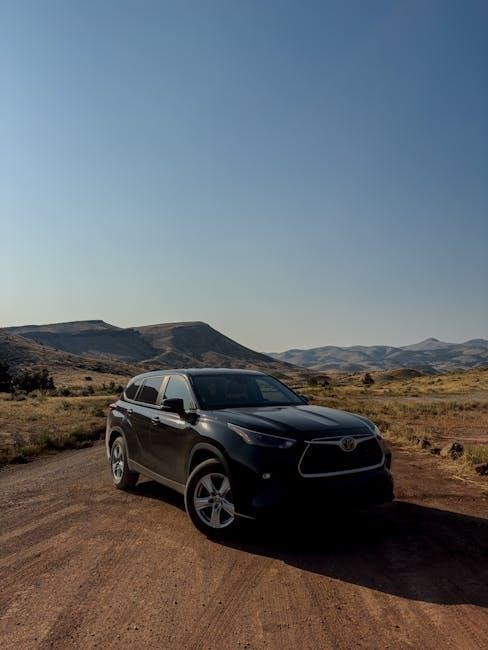
Driving Your 2013 Highlander
This section details starting‚ stopping‚ and normal driving procedures for your 2013 Highlander. It also covers the cruise control system’s operation and safety features.
Starting and Stopping the Engine
To start your 2013 Highlander‚ ensure the gear selector is in ‘P’ or ‘N’‚ and firmly press the brake pedal. Turn the ignition key to the ‘START’ position‚ releasing it once the engine ignites. For stopping‚ gently apply the brakes to come to a complete halt‚ then shift into ‘P’ and engage the parking brake. Always ensure the vehicle is fully stopped before shifting into park.
Normal Driving Operations
During normal driving in your 2013 Highlander‚ maintain a safe following distance and adhere to posted speed limits. Utilize turn signals for all lane changes and turns. Be mindful of pedestrian and cyclist traffic. Regularly check mirrors and blind spots. Smooth acceleration and braking contribute to fuel efficiency and passenger comfort. Prioritize safe driving practices at all times.
Cruise Control System Operation
The 2013 Highlander’s cruise control maintains a set speed‚ reducing driver fatigue on highways. Activate by pressing the “Cruise” button after reaching desired speed. Adjust speed using the “+” and “-” buttons. A flashing VSC light indicates system issues. Deactivate by pressing the brake or “Cancel” button. Use cautiously in adverse conditions.

Maintenance & Care
Regular maintenance ensures optimal performance and longevity for your 2013 Highlander. Follow the recommended schedule for fluid checks and necessary replacements.
Recommended Maintenance Schedule
Your 2013 Toyota Highlander’s maintenance schedule is crucial for reliability. Key services include oil and filter changes‚ tire rotations‚ and fluid level inspections. Regularly check belts‚ hoses‚ and brakes. Toyota recommends specific intervals for spark plug replacement and coolant flushes. Adhering to this schedule‚ detailed in the owner’s manual‚ maximizes vehicle lifespan and maintains warranty coverage‚ ensuring safe and efficient operation.
Fluid Checks & Replacements
Regularly inspect engine oil‚ coolant‚ brake fluid‚ power steering fluid‚ and windshield washer fluid levels in your 2013 Highlander. Toyota recommends specific replacement intervals for each. Low fluids can cause significant damage. Coolant flushes prevent corrosion‚ while brake fluid changes maintain stopping power. Use Toyota-approved fluids for optimal performance and to avoid compatibility issues‚ extending component life.

Warning & Indicator Lights
Dashboard lights alert drivers to vehicle conditions. The VSC light‚ for example‚ indicates stability control system activity‚ requiring a manual review.
Understanding Dashboard Warning Lights
The 2013 Highlander’s dashboard utilizes various warning lights to communicate critical vehicle information. These lights range from simple reminders‚ like a low fuel indicator‚ to serious alerts demanding immediate attention. Familiarize yourself with each symbol’s meaning; ignoring them could lead to damage or unsafe driving conditions. Consult the owner’s manual for detailed explanations of each light‚ including solid‚ flashing‚ and color variations‚ to properly diagnose and address any issues promptly.
Vehicle Stability Control (VSC) Light
The VSC light illuminates to indicate the Vehicle Stability Control system is actively engaged‚ helping maintain traction during challenging driving conditions. A flashing VSC light suggests the system is working normally‚ while a solid light signals a potential malfunction. Refer to the owner’s manual‚ section 2-4‚ for detailed troubleshooting steps and ensure safe operation of your 2013 Highlander.
Safety Features
Your 2013 Highlander prioritizes safety with features like an advanced airbag system and comprehensive seatbelt technology‚ including child restraint system guidance.
Airbag System Information
The 2013 Highlander’s airbag system is a crucial safety component‚ designed to work with seatbelts during moderate to severe collisions. It includes front‚ side‚ and curtain airbags. Understanding how the system functions is vital; improper positioning or modifications can increase injury risk. Always ensure passengers are correctly seated and restrained. Refer to the owner’s manual for detailed diagrams and warnings regarding airbag deployment and potential hazards.
Seatbelt Usage & Child Restraint Systems
Proper seatbelt use is paramount for all occupants in the 2013 Highlander‚ significantly reducing injury risk during collisions. The manual details correct seatbelt fitting and usage for adults and children. It also provides comprehensive guidance on selecting and installing appropriate child restraint systems‚ adhering to local laws and safety regulations. Always prioritize passenger safety and consult the manual for specific instructions;

In Case of Emergency
This section details crucial procedures for emergencies‚ including roadside assistance contact information and features designed to help during unexpected situations.
Emergency Assistance Features
Your 2013 Highlander may include features to aid in emergencies. These can range from standard equipment like hazard lights and a spare tire to potentially more advanced systems. Knowing how to utilize these features promptly is vital. Familiarize yourself with the location of the first-aid kit (if equipped) and understand how to activate hazard lights. Refer to the full owner’s manual for detailed instructions on specific emergency systems within your vehicle.
Roadside Assistance Information
Toyota provides roadside assistance for Highlander owners‚ offering services like towing‚ jump starts‚ tire changes‚ and fuel delivery. Contact information for accessing this assistance is detailed within your owner’s manual. It’s crucial to have your Vehicle Identification Number (VIN) readily available when calling; Explore available plans and coverage details to ensure you’re prepared for unexpected roadside events‚ maximizing peace of mind during travel.
Technical Specifications
This section details the 2013 Highlander’s engine specifications‚ dimensions‚ and capacities‚ providing crucial data for understanding your vehicle’s performance and capabilities.
Engine Specifications
The 2013 Toyota Highlander offered several engine options. The standard engine was a 2.7-liter four-cylinder producing 187 horsepower. A more powerful 3.5-liter V6 engine‚ delivering 270 horsepower‚ was also available. Hybrid models featured a 3.5-liter V6 combined with an electric motor. These specifications influence fuel economy and towing capacity‚ crucial for owners to understand for optimal performance and maintenance planning.
Dimensions & Capacities
The 2013 Toyota Highlander boasts generous dimensions for passenger and cargo space. Its length is approximately 190.3 inches‚ with a width of 75.8 inches and a height of 68.1 inches. Cargo capacity ranges from 10.2 cubic feet behind the third row to 94.2 cubic feet with both rear rows folded. Knowing these capacities aids in maximizing the vehicle’s utility for daily needs and travel.
Audio & Navigation System
The 2013 Highlander’s audio system offers quality sound‚ while the optional navigation system provides convenient route guidance and helpful points of interest.
Audio System Operation
The 2013 Highlander’s audio system features AM/FM radio‚ CD player‚ and auxiliary input for connecting external devices. Controls are conveniently located on the steering wheel and the central console. Users can adjust volume‚ tuning‚ and sound settings for optimal listening. Explore features like Bluetooth connectivity for wireless audio streaming and enjoy a premium sound experience throughout your journeys. Detailed instructions regarding specific functions are available within the owner’s manual.
Navigation System Guide
The 2013 Highlander’s navigation system‚ if equipped‚ offers turn-by-turn directions‚ points of interest‚ and real-time traffic updates. Users can input destinations via voice command or touchscreen. Map updates are crucial for accuracy and can be obtained through Toyota dealerships or online. Familiarize yourself with the system’s menus and settings for efficient route planning and a stress-free driving experience. Consult the owner’s manual for detailed operational guidance.

Climate Control System
The 2013 Highlander features a robust HVAC system‚ offering heating‚ cooling‚ and ventilation. Automatic climate control provides personalized comfort for all passengers.
Heating‚ Ventilation‚ and Air Conditioning (HVAC)
The 2013 Highlander’s HVAC system delivers optimal cabin comfort. Controls adjust temperature‚ fan speed‚ and airflow direction. Ventilation draws fresh air‚ while recirculation filters existing air. The system efficiently heats or cools‚ ensuring a pleasant driving experience. Understanding these controls allows personalized climate settings for driver and passengers‚ maximizing comfort during varied weather conditions. Proper operation maintains air quality and prevents window fogging.
Automatic Climate Control Features
The 2013 Highlander offers automatic climate control‚ maintaining a set temperature without constant adjustments. Drivers select desired warmth or coolness‚ and the system regulates airflow and temperature accordingly. This feature enhances driving comfort and convenience. It optimizes fuel efficiency by reducing manual adjustments‚ providing a consistently pleasant cabin environment for all occupants throughout the journey.

Hybrid System (If Applicable)
Hybrid models seamlessly blend gasoline and electric power for enhanced fuel efficiency. The manual details operation‚ maintenance‚ and specific hybrid system components.
Hybrid System Operation
The 2013 Highlander Hybrid intelligently switches between gasoline and electric power‚ or combines both‚ optimizing fuel economy and reducing emissions. The system automatically manages power distribution‚ requiring no driver intervention for normal operation. Understanding the interplay between the engine and electric motor enhances driving experience. The manual explains regenerative braking‚ which captures energy during deceleration‚ recharging the hybrid battery and further improving efficiency.
Hybrid System Maintenance
Maintaining the 2013 Highlander Hybrid involves specific procedures alongside standard vehicle care. The owner’s manual details inspection intervals for hybrid components like the battery and inverter. While generally reliable‚ the hybrid system requires attention to cooling systems and electrical connections. Regular checks ensure optimal performance and longevity of the hybrid powertrain‚ contributing to sustained fuel efficiency and reduced emissions.
Troubleshooting Common Issues
The 2013 Highlander manual offers solutions for frequently encountered problems‚ alongside a FAQ section. Addressing minor issues promptly can prevent more significant repairs.
Common Problems & Solutions
The 2013 Toyota Highlander’s owner’s manual details typical concerns‚ such as warning light illumination – particularly the VSC light – and cruise control malfunctions. Solutions range from simple resets to recommended professional inspections. Addressing issues early‚ as outlined in the PDF manual‚ can prevent costly repairs. Owners should consult the guide for specific diagnostic steps and maintenance advice related to their vehicle’s systems.
Frequently Asked Questions (FAQ)
The 2013 Toyota Highlander owner’s manual PDF frequently addresses questions about key fob operation‚ vehicle identification (VIN location)‚ and understanding dashboard warning lights. Users often inquire about accessing the digital manual and troubleshooting common issues. The manual also clarifies hybrid system specifics‚ if applicable‚ and warranty claim procedures for Toyota vehicles.

Warranty Information
The 2013 Highlander owner’s manual details warranty coverage‚ including claim procedures. It outlines specific components protected and the duration of each warranty aspect.
Warranty Coverage Details
The 2013 Toyota Highlander’s warranty typically includes coverage for defects in materials or workmanship. Basic coverage extends for 36 months/36‚000 miles‚ while powertrain components are often protected for 60 months/60‚000 miles. Corrosion protection may also be included‚ with varying durations. Specific details‚ exclusions‚ and claim requirements are thoroughly outlined within the official owner’s manual‚ ensuring owners understand their rights and responsibilities regarding warranty service.
Warranty Claim Procedures
To initiate a warranty claim for your 2013 Toyota Highlander‚ first‚ schedule a service appointment with an authorized Toyota dealership. Clearly describe the issue and provide documentation‚ like maintenance records. The dealership will diagnose the problem and submit the claim to Toyota. Approval depends on warranty terms. Owners should retain copies of all paperwork for their records.