Charles Glass, often called the “Godfather of Bodybuilding,” championed a straightforward, effective approach, prioritizing foundational strength and muscular development through intense training regimens.
His philosophy centered around building a solid base with heavy compound exercises, fostering overall power and size, a method proven through decades of experience and results.
The “Godfather of Bodybuilding” and His Approach
Charles Glass earned his moniker, the “Godfather of Bodybuilding,” through a no-nonsense, brutally effective training style that prioritized raw strength and substantial muscle mass. Unlike some modern approaches, Glass eschewed excessive isolation work, instead focusing on building a powerful foundation with fundamental, multi-joint movements.
His approach wasn’t about chasing trends; it was about consistently applying proven principles. He believed in pushing limits, demanding complete effort, and understanding the body’s response to intense stress. Glass’s routines weren’t designed for quick fixes, but for long-term, sustainable gains. He emphasized the importance of mastering proper form before adding weight, ensuring both effectiveness and injury prevention.
This philosophy, rooted in old-school bodybuilding, continues to resonate with those seeking genuine, lasting results, making his routines highly sought after even today, as evidenced by renewed interest in resources like a charles glass workout routine pdf.
Emphasis on Compound Exercises
Charles Glass’s training methodology heavily emphasized compound exercises – movements that engage multiple muscle groups simultaneously. This wasn’t merely a preference, but a core tenet of his philosophy for maximizing strength and stimulating overall muscle growth. Exercises like dips, presses (incline, flat, decline), and rows formed the backbone of his routines, building a robust and functional physique.
He believed these movements were superior to isolation exercises because they mimicked real-world movements and triggered a greater hormonal response, fostering more significant gains. A charles glass workout routine pdf will invariably showcase a high volume of these foundational lifts, prioritizing heavy weights and controlled repetitions.
This approach wasn’t about isolating individual muscles; it was about building a complete, powerful, and aesthetically pleasing physique through synergistic muscle activation and systemic overload.

Charles Glass’s Chest Workout Routine
Charles Glass’s chest work prioritized dips as a cornerstone, supplemented by various dumbbell presses and cable flyes for complete pectoral development, as seen in PDFs.
Dips: The Cornerstone Exercise
Charles Glass profoundly believed dips were the single most effective exercise for chest development, surpassing even bench pressing in its ability to build a powerful, defined upper chest.
He advocated for performing dips with a pronounced forward lean to maximize chest activation, emphasizing a full range of motion – descending until the elbows are slightly below shoulder level.
Glass often recommended adding weight using a dip belt once bodyweight became insufficient, continually challenging the pectoral muscles for sustained growth.
Many workout PDFs detailing his routines highlight the sheer volume of dips he prescribed, often reaching multiple sets of 10-15 repetitions, or even to absolute failure, showcasing its central role.
He considered dips a fundamental movement, building not only chest strength but also shoulder stability and triceps power, creating a well-rounded upper body physique.
Incline Dumbbell Press
Charles Glass incorporated the incline dumbbell press as a crucial component of his chest workouts, recognizing its unique ability to target the upper pectoral fibers – often underdeveloped in many bodybuilders.
Unlike the barbell incline press, dumbbells allowed for a greater range of motion and independent movement, addressing muscle imbalances and promoting fuller chest development.
Workout PDFs attributed to Glass typically detail performing 3-4 sets of 8-12 repetitions, focusing on a controlled eccentric (lowering) phase and a powerful, explosive concentric (lifting) phase.
He stressed the importance of maintaining a slight arch in the back and keeping the elbows at roughly a 45-degree angle to the body, maximizing chest engagement and minimizing shoulder stress.
Glass believed this exercise, when performed correctly, was instrumental in achieving a full, rounded chest, complementing the foundational work done with dips.
Flat Dumbbell Press
Charles Glass viewed the flat dumbbell press as essential for overall chest mass and strength, serving as a foundational movement alongside dips and other pressing variations.
He favored dumbbells over barbells for their increased range of motion and ability to correct strength imbalances between the left and right sides of the chest, promoting symmetrical development.
Charles Glass workout routines, often found in PDF format, typically prescribe 3-4 sets of 8-12 repetitions, emphasizing a slow, controlled descent and a forceful, focused ascent.
Proper form was paramount; Glass advocated for maintaining a stable base, retracting the shoulder blades, and driving the dumbbells in a slight arc to maximize pectoral activation.

This exercise, according to Glass’s principles, built a solid, powerful chest base, preparing the muscles for more specialized movements and contributing to overall upper body strength.
Decline Dumbbell Press
Charles Glass incorporated the decline dumbbell press into his chest routines to specifically target the lower pectoral muscles, contributing to a fully developed and aesthetically pleasing chest.
He believed this angle helped create a more defined separation between the chest and abdominal muscles, a key element in his pursuit of classic physique proportions.
Charles Glass workout routines, often detailed in PDF guides, typically recommend 3-4 sets of 8-12 repetitions, focusing on controlled movements and a full stretch at the bottom of the rep.
Maintaining proper form – a stable decline bench, retracted scapulae, and a deliberate pressing motion – was crucial to maximize effectiveness and minimize risk of injury.
Glass emphasized that the decline press wasn’t about lifting the heaviest weight, but about feeling the contraction in the lower chest throughout the entire range of motion.
Cable Flyes
Charles Glass strategically included cable flyes as a finishing movement in his chest workouts, prioritizing a peak contraction and enhanced muscle fiber recruitment for optimal development.
Unlike dumbbell flyes, cables provide constant tension throughout the entire range of motion, maximizing the stimulus to the pectoral muscles, a detail often highlighted in Charles Glass workout routine PDFs.
He typically prescribed 3 sets of 12-15 repetitions, emphasizing a slow, controlled movement with a pronounced squeeze at the center of the chest, focusing on feeling the muscle work.
Glass advocated for varying hand positions – high, mid, and low – to target different areas of the pectoral muscles, ensuring a comprehensive chest development.
Proper form, maintaining a slight bend in the elbows and avoiding locking them out, was paramount to prevent injury and maximize the effectiveness of this isolation exercise.
Charles Glass’s Shoulder Workout Routine
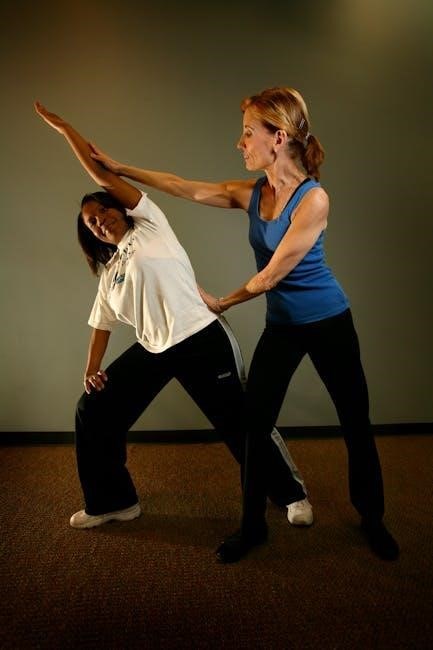
Charles Glass’s shoulder routine, detailed in many Charles Glass workout routine PDFs, focused on building broad, powerful shoulders through a blend of pressing and isolation movements.

Military Press
The Military Press, a cornerstone of Charles Glass’s shoulder development, was performed with a focus on strict form and controlled movements, as outlined in various Charles Glass workout routine PDFs. Glass advocated for a full range of motion, ensuring the bar touched the upper chest and fully extended overhead.
He emphasized the importance of bracing the core and maintaining a stable base throughout the exercise, preventing momentum and maximizing shoulder activation. Typically, Glass prescribed 3-4 sets of 6-8 repetitions, utilizing a weight that challenged the lifter while preserving proper technique. He believed in progressively overloading this exercise, gradually increasing the weight or repetitions over time to stimulate continued muscle growth.
Glass often incorporated variations, such as seated military presses, to further isolate the shoulder muscles and minimize lower body involvement, ensuring optimal shoulder development.
Lateral Raises
Lateral Raises, crucial for building broader shoulders according to Charles Glass’s principles detailed in Charles Glass workout routine PDFs, were executed with a deliberate focus on isolating the medial deltoids. Glass stressed the importance of maintaining a slight bend in the elbows throughout the movement, preventing momentum and maximizing muscle engagement.
He advocated for controlled ascents to shoulder height, avoiding the temptation to raise the dumbbells higher, which could lead to improper form and potential injury. Typically, Glass recommended 3-4 sets of 10-12 repetitions, selecting a weight that allowed for strict execution.
He often suggested performing these raises with a slight lean forward to further isolate the medial deltoids and enhance the mind-muscle connection, contributing to optimal shoulder width and definition.
Front Raises
Front Raises, a staple in Charles Glass’s shoulder routines as outlined in various Charles Glass workout routine PDFs, were performed with a focus on controlled movement and strict form. Glass emphasized the importance of isolating the anterior deltoids, avoiding any swinging or momentum to lift the weight.
He typically recommended using dumbbells or a weight plate, raising the weight slowly and deliberately to shoulder height, maintaining a slight bend in the elbows. Glass advocated for 3-4 sets of 10-12 repetitions, selecting a weight that challenged the muscles without compromising form.
He believed in a full range of motion, lowering the weight slowly and with control, maximizing muscle fiber recruitment and promoting balanced shoulder development. Proper execution was paramount to avoid injury and achieve optimal results.
Rear Delt Flyes
Rear Delt Flyes were a crucial component of Charles Glass’s shoulder workouts, frequently detailed in Charles Glass workout routine PDFs, designed to address often-neglected posterior deltoids. Glass stressed the importance of balanced shoulder development, preventing imbalances that could lead to injury or postural issues.
He typically prescribed performing these with dumbbells, bent over at the waist with a flat back, or utilizing a rear delt fly machine. The focus was on squeezing the shoulder blades together as the weights were raised, maintaining a slight bend in the elbows throughout the movement.
Glass recommended 3-4 sets of 12-15 repetitions, prioritizing controlled contractions over heavy weight. He emphasized feeling the contraction in the rear deltoids, ensuring proper form to maximize effectiveness and minimize risk of injury.
Upright Rows
Upright Rows, a staple in Charles Glass’s shoulder training, as often outlined in Charles Glass workout routine PDFs, targeted the medial and lateral deltoids alongside the traps, contributing to broader, more sculpted shoulders. Glass advocated for a controlled execution, emphasizing proper form to avoid shoulder impingement.
He typically instructed using a barbell with a shoulder-width grip, pulling the weight upwards towards the chin while keeping the elbows higher than the wrists. Maintaining a rigid torso and avoiding excessive momentum were key components of his technique.
Glass generally recommended 3 sets of 8-12 repetitions, focusing on a deliberate, squeezing motion at the top of the movement. He cautioned against using excessively heavy weight, prioritizing controlled form and a full range of motion for optimal results and injury prevention.

Charles Glass’s Bicep Workout Routine
Charles Glass prioritized peak development, employing a blend of barbell, dumbbell, and concentration curls to sculpt impressive biceps, as detailed in workout PDFs.
Barbell Curls
Barbell curls formed a cornerstone of Charles Glass’s bicep work, emphasizing raw strength and overall mass. He advocated for strict form, avoiding momentum to truly isolate the biceps muscle throughout the entire range of motion.
Glass typically prescribed 3-4 sets of 8-12 repetitions, focusing on a controlled ascent and a slow, deliberate descent. He stressed the importance of maintaining a stable core and keeping the elbows tucked in to maximize bicep activation and prevent injury.
Variations, such as slightly wider or narrower grips, were occasionally incorporated to target different portions of the bicep. As outlined in various workout PDFs attributed to his methods, Glass believed in progressively increasing the weight as strength improved, ensuring continuous challenge and growth. Proper warm-up and cool-down routines were also essential components of his approach.
Dumbbell Curls
Charles Glass incorporated dumbbell curls as a crucial element in sculpting well-rounded biceps, complementing the foundational strength built with barbell variations. He favored the versatility of dumbbells, allowing for a greater range of motion and individual arm development.
His routine typically involved alternating curls, focusing on squeezing the biceps at the peak contraction. Glass recommended 3-4 sets of 10-15 repetitions per arm, maintaining strict form and avoiding swinging. He believed this fostered a stronger mind-muscle connection.
Workout PDFs detailing his methods often highlight the benefit of dumbbells in addressing muscle imbalances. Supinated dumbbell curls, with palms facing upwards, were a staple. Progressive overload, increasing weight or repetitions, remained central to his philosophy, driving continuous muscle growth and definition.
Concentration Curls
Charles Glass highly valued concentration curls for their ability to isolate the biceps, minimizing momentum and maximizing muscle activation. This exercise, a cornerstone in his routines, demanded strict form and a focused mind-muscle connection, crucial for achieving peak biceps development.
Typically performed seated with the elbow braced against the inner thigh, Glass advocated for slow, controlled repetitions, emphasizing the squeeze at the top of the movement. Workout PDFs often illustrate his recommendation of 3-4 sets of 12-15 repetitions per arm.
He believed this technique effectively eliminated cheating and fostered a superior pump. Glass stressed the importance of fully extending the arm on the negative portion of the lift, maximizing the stretch and subsequent muscle growth. Progressive overload, naturally, was key to continued progress.
Hammer Curls
Charles Glass incorporated hammer curls into his bicep work to target the brachialis and brachioradialis muscles alongside the biceps, contributing to overall arm thickness and strength. Unlike standard curls, hammer curls are performed with a neutral grip – palms facing each other – resembling holding a hammer.
Workout PDFs detailing his routines often show 3-4 sets of 10-12 repetitions. Glass emphasized maintaining a stable core and avoiding swinging the body to generate momentum, focusing instead on controlled contractions. He believed this variation built functional strength;
The neutral grip also reduced stress on the wrists compared to traditional curls. Glass advocated for a full range of motion, ensuring a complete stretch at the bottom and a strong squeeze at the peak contraction for optimal muscle fiber recruitment and growth.
Charles Glass’s Training Principles
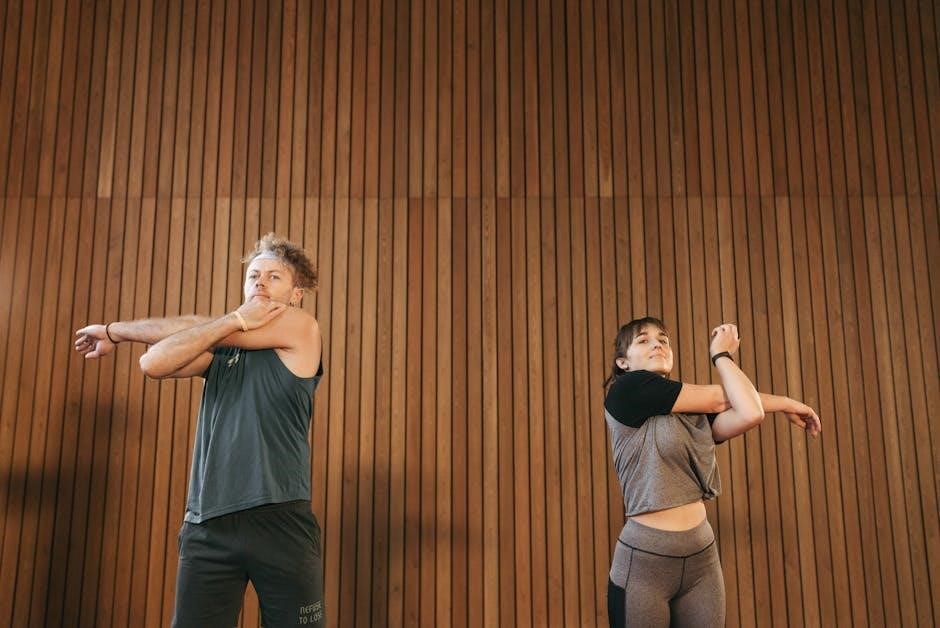
Charles Glass stressed proper form above all else, advocating for progressive overload, and prioritizing sufficient rest and recovery to maximize gains and prevent injury.
Importance of Proper Form
Charles Glass relentlessly emphasized that impeccable form is paramount, exceeding even the weight lifted; it’s the bedrock of effective and safe training. He believed sacrificing technique for heavier loads inevitably leads to injury and hinders long-term progress, diminishing potential gains;
Glass advocated for controlled movements, focusing on feeling the targeted muscle group contract throughout the entire range of motion. This mindful approach ensures optimal muscle fiber recruitment and minimizes the risk of strain. He’d often correct trainees, prioritizing technique over ego, instilling a discipline focused on quality over quantity.
Maintaining correct posture and alignment isn’t merely about avoiding injury; it’s about maximizing the effectiveness of each repetition, truly isolating and working the intended muscles. Glass’s dedication to form wasn’t just a preference—it was the core of his successful training methodology.
Progressive Overload
Charles Glass firmly believed in the principle of progressive overload as the primary driver of muscle growth and strength gains. This involves consistently challenging the muscles by gradually increasing the demands placed upon them over time, forcing adaptation.

He didn’t advocate for drastic jumps in weight, but rather a methodical, incremental approach. This could manifest as adding small increments of weight, increasing repetitions, shortening rest periods, or enhancing the range of motion. The key was consistent, sustainable progression.
Glass understood that the body adapts quickly to stress, so continual challenge is crucial. Stagnation occurs when the stimulus remains constant. Progressive overload, applied intelligently and consistently, ensures continuous improvement and prevents plateaus, unlocking ongoing physical development.
Rest and Recovery
Charles Glass recognized that muscle growth doesn’t occur during training, but rather during rest and recovery. He stressed the importance of allowing the body adequate time to repair and rebuild muscle tissue damaged during intense workouts.
This wasn’t simply about getting enough sleep, though that was paramount. It also encompassed strategic deloading periods – planned reductions in training volume or intensity – to prevent overtraining and allow for full recovery. Glass understood the body’s limitations.
He advocated for listening to your body and adjusting training based on individual needs. Ignoring fatigue and pushing through pain could lead to injury and hinder progress. Prioritizing rest is as vital as the training itself, fostering long-term gains and preventing burnout.

Accessing Charles Schwab Financial Services
Charles Schwab provides diverse financial tools, including brokerage accounts, automated investment options via Schwab Intelligent Portfolios, and a wide array of investment products.
Schwab Brokerage Login
Securely accessing your Schwab brokerage account is paramount for managing your investments and utilizing the firm’s comprehensive financial services. The login process is designed with robust security measures to protect your sensitive information, ensuring a safe and reliable experience.
To log in, navigate to the Schwab website and locate the “Login” button, typically found in the upper right-hand corner of the page. You will be prompted to enter your username and password. For first-time users or those who have forgotten their credentials, Schwab offers straightforward recovery options, including username/password retrieval and multi-factor authentication for enhanced security.

Once logged in, you’ll have access to a personalized dashboard displaying your account balances, holdings, market data, and research tools. Schwab’s platform is designed for intuitive navigation, allowing you to easily execute trades, monitor performance, and access important account information. Remember to always log out securely when finished to protect your account.
Schwab Intelligent Portfolios
Schwab Intelligent Portfolios represent a modern approach to investment management, offering automated, professionally managed portfolios designed to align with your individual financial goals and risk tolerance. This service leverages sophisticated algorithms and a disciplined investment strategy to build and maintain a diversified portfolio across various asset classes.
Unlike traditional brokerage accounts requiring active management, Intelligent Portfolios automatically rebalances your portfolio, reinvests dividends, and minimizes tax-loss harvesting opportunities. The service is accessible with a relatively low minimum investment, making it an attractive option for both novice and experienced investors.
Schwab’s digital advisory platform provides ongoing monitoring and adjustments, adapting to market conditions and your evolving financial needs. It’s a convenient, cost-effective solution for those seeking a hands-off investment experience backed by the resources and expertise of a leading financial institution.
Investment Products at Schwab
Charles Schwab provides a comprehensive suite of investment products designed to cater to diverse financial strategies and risk profiles. Investors can access a wide array of options, including stocks, bonds, exchange-traded funds (ETFs), mutual funds, and options contracts, allowing for customized portfolio construction.
Schwab also offers access to fixed income investments, certificates of deposit (CDs), and money market funds, providing options for more conservative investors seeking stability and liquidity. For those planning for retirement, Schwab provides various retirement accounts, including IRAs and 401(k) rollovers.
Furthermore, Schwab offers specialized investment products like international stocks and bonds, providing opportunities for global diversification. Their platform supports both self-directed investing and professionally managed solutions, empowering investors to choose the level of control that suits their needs and expertise.