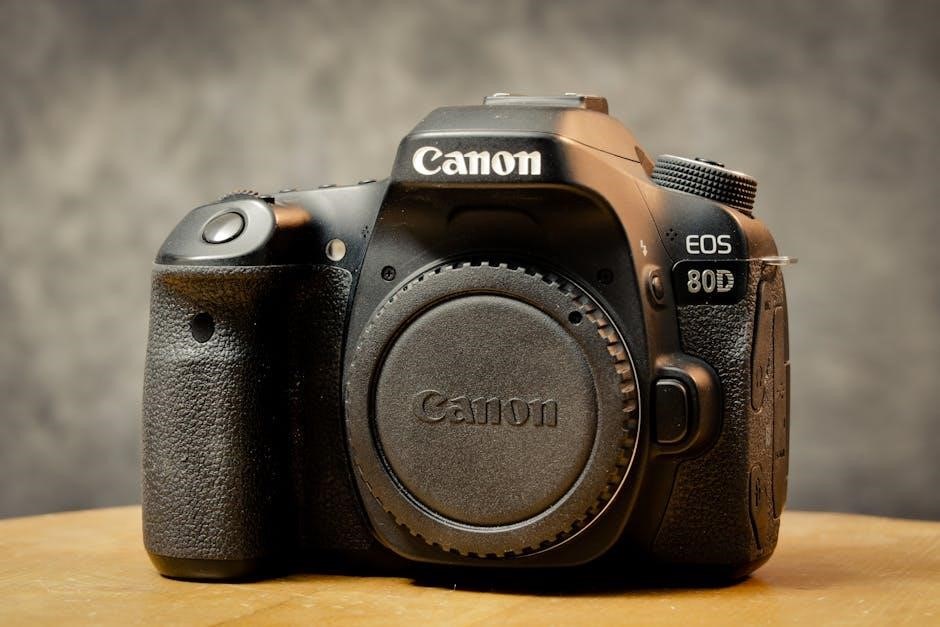
The Canon EOS Rebel T1i (also known as the EOS 500D) offers a detailed CMOS sensor and user-friendly features, with a readily available PDF manual for guidance.
Canon provides comprehensive support, including downloadable manuals and drivers, ensuring users can fully utilize this digital SLR camera’s capabilities.
Purchasers receive a high-performance camera accompanied by a detailed manual, facilitating a smooth learning curve and optimal photographic results.
What is the Canon Rebel T1i?
The Canon Rebel T1i, or EOS 500D, is a digital single-lens reflex (DSLR) camera renowned for its 15.1-megapixel CMOS sensor and excellent image quality. Released in 2009, it quickly became popular among photography enthusiasts and beginners alike.
A crucial resource for understanding its features is the official Canon Rebel T1i manual, available as a PDF download. This manual details every aspect of the camera, from basic operation to advanced settings.
It’s designed to help users maximize their photographic potential, offering clear instructions and troubleshooting advice. Accessing the manual ensures a comprehensive understanding of the camera’s capabilities.
Key Features and Specifications
The Canon Rebel T1i (EOS 500D) boasts a 15.1-megapixel CMOS sensor, DIGIC 4 Image Processor, and 3.0-inch LCD screen. It captures stunning images and 720p HD video. The Canon manual details these specifications.
Key features include a 9-point autofocus system and a sensitivity range of ISO 100-6400. The downloadable PDF manual provides in-depth explanations of each setting.
Understanding these specifications, as outlined in the manual, is vital for achieving optimal image quality and utilizing the camera’s full potential.

Getting Started with Your Camera
Begin your journey with the Canon Rebel T1i by referencing the comprehensive manual, ensuring proper unboxing, battery charging, and memory card formatting procedures.
The manual guides initial setup, allowing for a quick and efficient start to capturing memorable images with your new camera.
Unboxing and Initial Setup
Carefully unpack your Canon EOS Rebel T1i, verifying all included components against the manual’s checklist. The manual details each item – camera body, battery, charger, strap, and accompanying software CDs.
Before powering on, consult the manual for proper battery installation and initial charging procedures. It’s crucial to fully charge the battery before first use. The manual also guides inserting a compatible memory card, essential for storing your photos and videos.
Follow the manual’s step-by-step instructions to set the date, time, and language preferences, completing the initial setup process.
Charging the Battery
Refer to your Canon Rebel T1i manual for detailed battery charging instructions. Connect the battery charger to a suitable power outlet and insert the battery, ensuring correct polarity.
The manual indicates a charging indicator light will illuminate, signaling the charging process. Allow sufficient time for a full charge – the manual specifies the approximate duration.
Avoid interrupting the charging cycle. Once complete, disconnect the charger. The manual emphasizes proper battery care for optimal performance and longevity.
Inserting and Formatting Memory Cards
Consult your Canon Rebel T1i manual for proper memory card insertion. Locate the card slot and gently insert a compatible card, following the indicated direction.
The manual details how to format the card through the camera’s menu before first use, or after transferring images. Formatting erases all data, so back up important files first!
Formatting ensures compatibility and optimal performance. The manual warns against formatting on a computer, as it may cause issues with camera recognition.
Understanding the Camera Controls
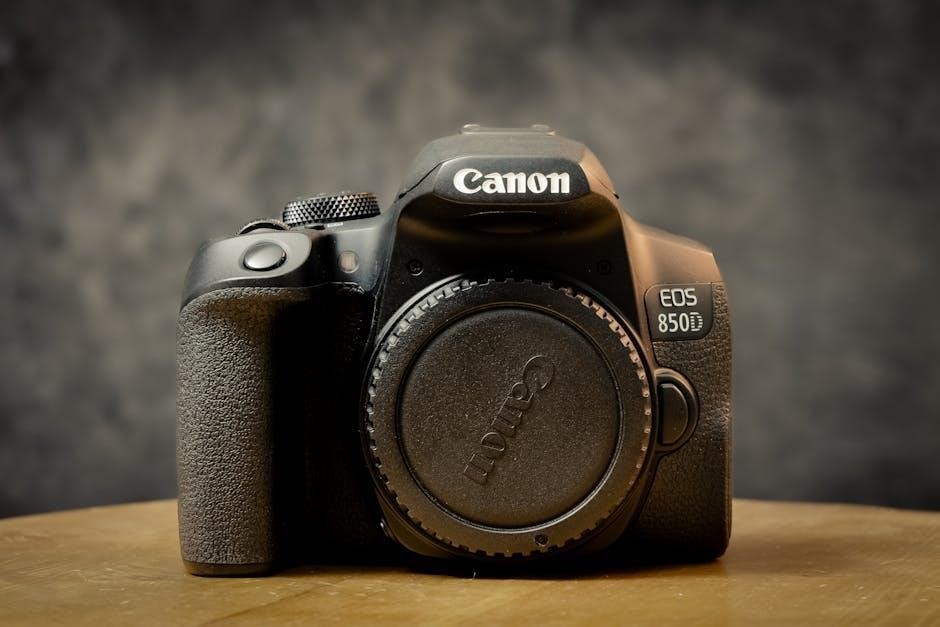
The Canon Rebel T1i manual details the function of each control, including the power button, mode dial, shutter button, and focus mode selection switch.
Mastering these controls, as explained in the manual, is crucial for operating the camera effectively and achieving desired photographic results.
Power Button and Mode Dial
The Canon Rebel T1i manual thoroughly explains the power button’s function – a simple press activates the camera, bringing it to life for capturing moments;
Crucially, the manual details the mode dial’s various settings, ranging from fully automatic modes for beginners to advanced options like Program, Shutter Priority, Aperture Priority, and Manual.
Understanding each mode, as outlined in the manual, empowers users to control aperture, shutter speed, and ISO, unlocking creative potential and tailoring settings to specific shooting scenarios.
Shutter Button and Dial
The Canon Rebel T1i manual details the two-stage shutter button: a half-press for autofocus and exposure metering, and a full press to capture the image. Mastering this is key.
The manual also explains the function of the rear dial, used for adjusting settings like aperture in Aperture Priority mode or shutter speed in Shutter Priority mode.
Users can consult the manual to learn how these controls interact, enabling precise adjustments and creative control over depth of field and motion blur in their photographs.
Focus Mode Selection (AF/MF)
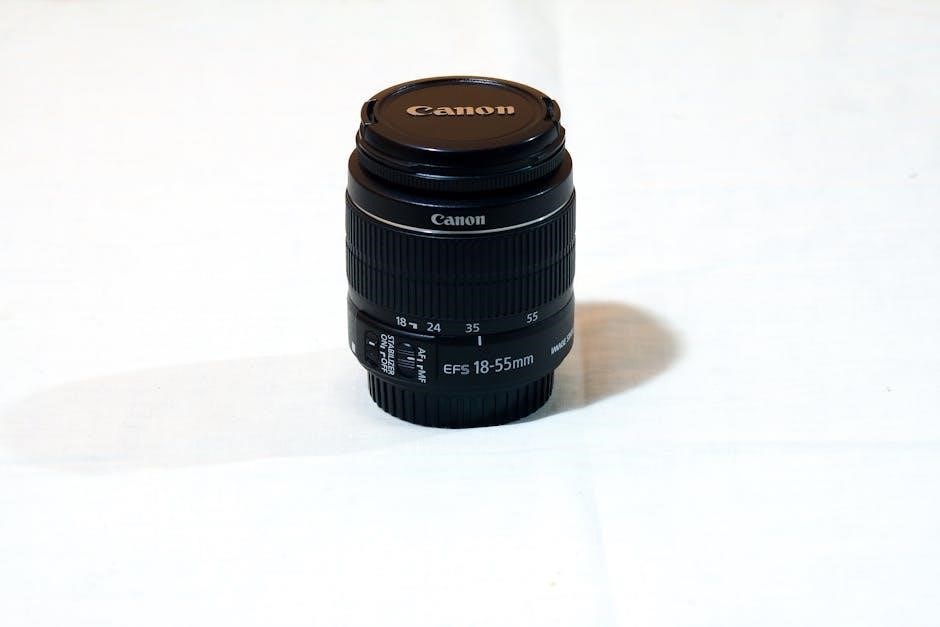
The Canon Rebel T1i manual clarifies the autofocus (AF) and manual focus (MF) switch located directly on the lens itself, not the camera body. This is a crucial detail for beginners.
The manual explains that switching to MF allows for precise focusing control, especially useful in low-light situations or when autofocus struggles to lock onto a subject.
Consulting the manual will demonstrate how to effectively utilize both modes, ensuring sharp and well-focused images regardless of the shooting conditions or desired creative effect.
Shooting Modes Explained
The Canon Rebel T1i manual details various shooting modes, from fully automatic options for beginners to advanced manual controls for experienced photographers.
Understanding these modes, as outlined in the manual, unlocks creative potential and allows for tailored image capture.
Auto Mode for Beginners
The Canon Rebel T1i manual clearly explains Auto mode as the simplest way to start taking pictures immediately. This mode automatically selects all camera settings – aperture, shutter speed, ISO, and white balance – optimizing them for the current scene.
It’s ideal for those unfamiliar with photographic principles, allowing instant, hassle-free shooting. The manual emphasizes that while convenient, Auto mode offers limited creative control, but serves as a fantastic entry point for new users to explore photography.
Beginners can focus on composition and capturing moments without technical complexities.
Program Mode (P)
According to the Canon Rebel T1i manual, Program (P) mode offers a balance between automatic operation and creative control. The camera sets both aperture and shutter speed, but allows users to adjust ISO, white balance, and exposure compensation.
This mode is a step up from full Auto, providing more flexibility without requiring full manual control. The manual highlights that Program mode is excellent for varied shooting conditions, letting the camera handle the basics while you refine the image.
It’s a versatile option for intermediate photographers.
Shutter Priority Mode (Tv)
The Canon Rebel T1i manual details Shutter Priority (Tv) mode, allowing photographers to control the shutter speed while the camera automatically adjusts the aperture for proper exposure. This is ideal for capturing motion – freezing action with fast speeds or blurring movement with slower ones.
The manual emphasizes that Tv mode is particularly useful for sports or waterfall photography. Users can select a shutter speed, and the camera will choose the corresponding aperture value to achieve a well-exposed image.
Experimentation is encouraged!
Aperture Priority Mode (Av)
According to the Canon Rebel T1i manual, Aperture Priority (Av) mode grants photographers control over the lens aperture, influencing depth of field, while the camera automatically sets the shutter speed. A wider aperture (lower f-number) creates a shallow depth of field, ideal for portraits.
Conversely, a narrower aperture (higher f-number) maximizes depth of field, suitable for landscapes. The manual clarifies that Av mode is excellent for controlling background blur and focusing attention;
Mastering aperture is key to creative control!
Full Manual Mode (M)
The Canon Rebel T1i manual details that Full Manual (M) mode provides complete control over both aperture and shutter speed, allowing photographers to dictate exposure entirely. This mode demands understanding of the exposure triangle – aperture, shutter speed, and ISO.
The manual emphasizes M mode’s suitability for challenging lighting conditions or when precise creative control is paramount. It’s ideal for learning photographic principles and achieving specific artistic visions.
Practice makes perfect in Manual mode!

Focusing and Image Quality
The Canon Rebel T1i manual explains autofocus point selection and manual focusing techniques, alongside RAW versus JPEG image quality settings for optimal results.
Lenses feature autofocus/manual focus switches, detailed in the manual, impacting image sharpness and creative control.
Autofocus Points and Selection
The Canon Rebel T1i manual details the camera’s nine autofocus (AF) points, crucial for achieving sharp images. Understanding how to select these points is key to precise focusing, especially for moving subjects.
The manual explains single-point AF for stationary subjects and AI Servo AF for tracking motion. Users can choose AF points manually via the buttons, or utilize automatic selection modes. Proper AF point selection, as outlined in the manual, significantly impacts image clarity and overall photographic quality.
Manual Focusing Techniques
The Canon Rebel T1i manual explains how to switch to manual focus (MF) using the lens’s focus mode switch. This allows precise control over focus, bypassing the autofocus system. The manual emphasizes using Live View mode for magnified image display, aiding critical focus adjustments.
Carefully rotating the focusing ring on the lens achieves sharpness. The manual also notes that the in-lens focusing system is switched on/off directly on the lens itself, regardless of camera settings.
Image Quality Settings (RAW vs. JPEG)
The Canon Rebel T1i manual details the choice between RAW and JPEG image formats. RAW captures all image data, offering maximum editing flexibility, while JPEG provides smaller file sizes with in-camera processing.
The manual explains that RAW files require post-processing software like Adobe Reader (version 6.0 or later) for viewing and editing. Selecting the appropriate format depends on your workflow and desired level of control over the final image.
Navigating the Menu System
The Canon Rebel T1i manual guides users through customizing camera settings, including date, time, and language options, via its intuitive menu system.
Customizing Camera Settings
The Canon Rebel T1i manual details extensive customization options accessible through the camera’s menu. Users can personalize image quality, autofocus behavior, and display settings to match their preferences.
Adjusting these settings allows photographers to fine-tune the camera’s performance for specific shooting scenarios. The manual clearly explains each option, ensuring users can optimize their T1i for both still photography and video recording. Explore the menu to unlock the camera’s full potential!
Setting Date, Time, and Language
The Canon Rebel T1i manual guides users through setting the correct date, time, and preferred language within the camera’s menu system. Accurate date and time are crucial for proper image file organization and metadata tagging.
This initial setup ensures photos are chronologically ordered and easily searchable. The manual provides step-by-step instructions for navigating the menu and selecting the desired settings, making this process straightforward for all users.
Using the Built-in Flash
The Canon Rebel T1i manual details flash modes and settings, including red-eye reduction, to optimize image illumination in various shooting conditions.
Flash Modes and Settings
The Canon Rebel T1i manual comprehensively explains the available flash modes. Auto mode lets the camera decide when to fire, while manual flash control offers precise power adjustment.
Users can select from options like flash on, flash off, and slow-sync flash for creative effects. The manual details how to adjust flash exposure compensation, influencing the flash’s intensity. Understanding these settings is crucial for achieving well-lit and balanced photographs in diverse scenarios, as outlined in the PDF manual.
Red-Eye Reduction
The Canon Rebel T1i manual details the red-eye reduction feature, designed to minimize the appearance of red pupils in flash photography. This function works by emitting a series of pre-flashes before the main flash, constricting the subject’s pupils.
The PDF manual explains how to enable red-eye reduction in the camera’s settings. While effective, it may slightly increase the time between pressing the shutter and capturing the image. Understanding its operation, as described in the guide, helps achieve natural-looking portraits.
Understanding the Viewfinder and LCD Screen
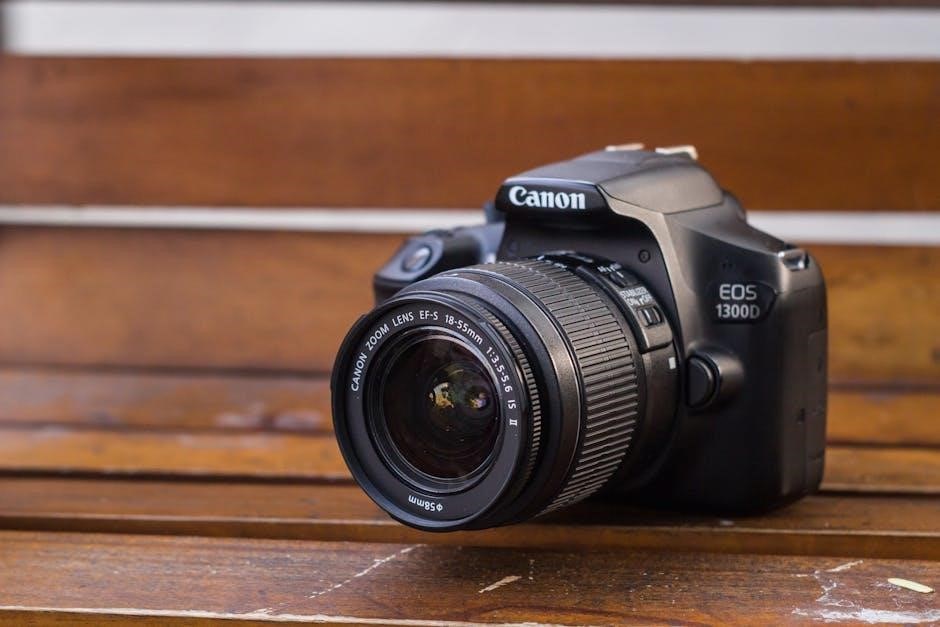
The Canon Rebel T1i manual explains the viewfinder’s information display and LCD screen settings, offering customizable options for a tailored shooting experience.
Users can adjust display brightness and information shown on the LCD, as detailed in the PDF manual.
Viewfinder Information Display
The Canon Rebel T1i manual details the comprehensive information presented within the optical viewfinder. This includes crucial shooting parameters like autofocus points actively selected, shutter speed, aperture setting, and exposure compensation values.
Additionally, the viewfinder displays the shooting mode currently engaged, the number of remaining shots based on the memory card capacity, and various camera settings. Understanding these indicators, as explained in the PDF manual, is vital for precise control and informed decision-making during photography.
The manual also clarifies how to customize certain display elements to suit individual preferences.
LCD Screen Settings and Display Options
The Canon Rebel T1i manual thoroughly explains the LCD screen’s customizable settings. Users can adjust brightness and color tone for optimal viewing in various lighting conditions, as detailed in the PDF version.
Display options include a live histogram for exposure evaluation, grid lines for composition assistance, and shooting information overlays. The manual guides users through menu navigation to enable or disable these features.
Furthermore, the LCD can display image playback information and facilitate menu control, enhancing the overall shooting experience.
Downloading and Using the Canon Rebel T1i Manual (PDF)
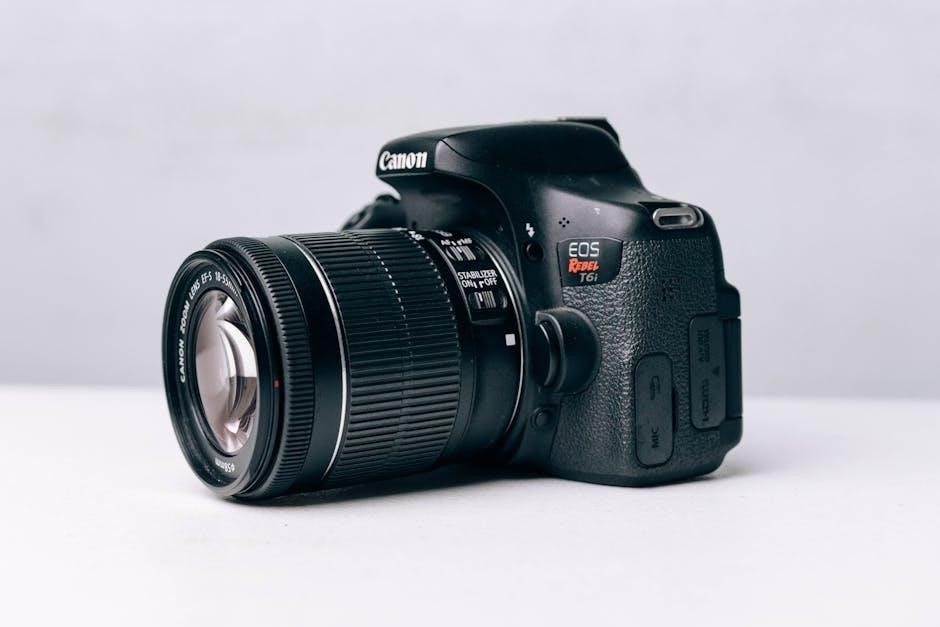
The Canon Rebel T1i manual is available as a PDF online, requiring Adobe Reader 6.0 or later for viewing, ensuring easy access to guidance.
Finding the Official Canon Manual Online
Locating the official Canon Rebel T1i (EOS 500D) manual is straightforward through Canon’s support website. Users can easily browse recommended downloads and manuals specifically for this model.
Canon provides direct access to the PDF version of the manual, ensuring owners have readily available documentation. Searching “Canon EOS Rebel T1i manual” will quickly lead to the official resource, offering comprehensive guidance for camera operation and features.
This online availability simplifies access and eliminates the need for physical copies.
Software Requirements for Viewing the PDF
To properly view the Canon Rebel T1i (EOS 500D) manual PDF, users require compatible software. Adobe Reader version 6.0 or later is recommended for optimal viewing and functionality.
Older versions, such as Adobe Acrobat Reader 5.x, may display a watermark text labeled “COPY” across the PDF document. Ensuring you have an updated Adobe Reader guarantees a clean and fully accessible viewing experience of the camera’s comprehensive guide.
This ensures all features are clearly visible.

Troubleshooting Common Issues
The Canon Rebel T1i manual assists with issues like the camera not powering on, focusing problems, or deciphering error messages for quick solutions.
Refer to the PDF for detailed guidance on resolving these common operational challenges.
Camera Not Turning On
If your Canon Rebel T1i fails to power on, the manual suggests checking the battery compartment first, ensuring it’s securely fastened and adequately charged.
Confirm the battery has sufficient power by testing with a known working battery, if available. Also, inspect the battery contacts for any corrosion or debris that might impede connection.
The manual also advises verifying the power mode dial is set to a position other than ‘OFF’. If the issue persists, consult the troubleshooting section within the PDF manual for further assistance.
Focusing Problems
If experiencing focusing issues with your Canon Rebel T1i, the manual directs users to verify the lens’s autofocus/manual focus switch is set to ‘AF’ for autofocus operation.
Ensure the selected autofocus point is positioned over the desired subject within the viewfinder. The manual details how to select different AF points for varied compositions.
If using manual focus, carefully rotate the focusing ring on the lens until the subject appears sharp in the viewfinder or on the LCD screen, as described in the PDF manual.
Error Messages and Solutions
The Canon Rebel T1i’s manual details various error messages and their corresponding solutions; If the camera fails to power on, the manual suggests checking the battery charge and ensuring proper insertion.
Memory card errors, as outlined in the PDF manual, often require reformatting the card or trying a different compatible card. Consult the manual for supported card types.
Other errors may indicate lens compatibility issues or internal camera problems; the manual advises contacting Canon support for further assistance and potential repair options.

Lens Compatibility and Usage
The Canon Rebel T1i manual confirms compatibility with Canon EF and EF-S lenses, featuring in-lens focusing controlled via a switch on the lens itself.
Image stabilization (IS) functionality, detailed in the manual, is lens-dependent and enhances image clarity during handheld shooting.
Canon EF and EF-S Lenses
The Canon Rebel T1i manual explicitly details compatibility with both Canon EF and EF-S lenses, offering users a broad selection for diverse photographic needs. EF lenses are designed for full-frame cameras but function perfectly on the T1i’s APS-C sensor.
EF-S lenses, specifically engineered for APS-C sensors like the T1i’s, provide a lighter and more compact design. The manual emphasizes checking lens specifications for optimal performance and compatibility; Utilizing these lenses unlocks a wide range of creative possibilities.
Image Stabilization (IS) on Lenses
The Canon Rebel T1i manual highlights the benefits of lenses equipped with Image Stabilization (IS) technology. IS minimizes blur caused by camera shake, crucial for sharp images, especially in low light or when using longer focal lengths.
The manual explains that IS lenses feature a switch to toggle stabilization on or off. It’s recommended to enable IS during handheld shooting and disable it when using a tripod for optimal results. Understanding IS functionality enhances image quality significantly.
Advanced Features
The Canon Rebel T1i manual details features like Live View shooting and remote control operation, expanding creative possibilities beyond standard photography techniques.
Live View Shooting
The Canon Rebel T1i manual explains Live View, allowing image composition on the LCD screen instead of the viewfinder. This feature is beneficial for precise focusing and creative angles.
The manual details how to activate Live View, select focus modes, and utilize the zoom function for critical sharpness. It also covers potential limitations, such as increased sensor heat during prolonged use.
Understanding the manual’s guidance on Live View unlocks a versatile shooting style, particularly useful for macro photography or shooting from awkward positions.
Remote Control Operation
The Canon Rebel T1i manual details how to use a compatible remote control for triggering the shutter without physically touching the camera. This minimizes camera shake, crucial for long exposures and macro shots.
The manual explains compatible remote control models and how to connect them to the camera’s remote control terminal. It also outlines settings for customizing remote operation, like single or continuous shooting.
Referencing the manual ensures proper setup and functionality, enabling stable, hands-free photography and expanding creative possibilities with the Canon EOS Rebel T1i.
Maintaining Your Canon Rebel T1i
The Canon Rebel T1i manual provides guidance on sensor cleaning and proper battery care, ensuring longevity and optimal performance of your camera.
Cleaning the Sensor
The Canon Rebel T1i manual details crucial sensor cleaning procedures to maintain optimal image quality. Dust accumulation can significantly impact photos, so regular checks are vital.
The manual advises using a blower to remove loose particles first. If persistent dust remains, a sensor cleaning kit—specifically designed for CMOS sensors—is recommended.
Always follow the manual’s instructions carefully to avoid damaging the delicate sensor. Improper cleaning can lead to costly repairs, so proceed with caution and diligence.
Battery Care and Storage
The Canon Rebel T1i manual emphasizes proper battery handling for longevity and performance. Avoid extreme temperatures, as heat degrades battery life, and cold reduces capacity.
The manual recommends fully charging the battery before initial use and periodically thereafter, even during storage. When storing for extended periods, charge to about 40-60%.
Always use the Canon-supplied charger, and avoid short-circuiting the terminals. Following these guidelines, as outlined in the manual, ensures reliable power for your camera.